
Skip to content
ReadyTrip
Vietnam

destination

Vietnam

Overview

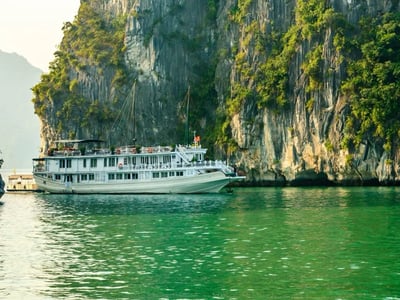
Vietnam is Southeast Asia's best-value destination. Flights connect well from across Asia, Europe and Australia, entry is visa-free for 25+ nationalities, and a full day of street food, coffee and local transport fits into ₫450,000-₫750,000 ($17-$28). The places to see in Vietnam are different from each other: misty limestone bays in the north, a golden bridge held by giant stone hands in the centre, white-sand islands in the south.

The one planning mistake to avoid: treating Vietnam as one destination. It is 1,600 km long, so pick a region per trip and check its season, not the country's.


Cities to Explore

Visa and entry rules

Vietnam runs two entry tracks. Citizens of about 25 countries — including the UK, Germany, France, Italy, Spain, Japan, South Korea and Russia — enter visa-free for up to 45 days; most Southeast Asian passports get 14-30 days. Everyone else — the US, Canada, Australia, India and China included — applies online for the e-visa: US$25 single entry or US$50 multiple entry, valid for stays up to 90 days.

Apply only on the official portal, evisa.gov.vn — lookalike agent sites rank in search ads and charge three to five times the real fee. Processing officially takes 3 working days; allow a week. One catch: the entry airport you pick in the form is fixed after approval, so match it to your flight ticket.

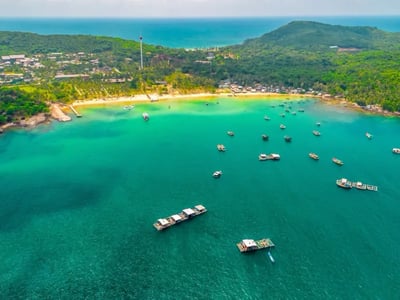
Phu Quoc island is the exception — visa-free for all nationalities for up to 30 days on direct arrivals. Vietnam expanded its visa-free list in 2025 and reviews it often, so confirm your passport's current rules before booking non-refundable flights.

Best time to visit

There is no single best season — it depends on the region. North (Hanoi, Ha Long Bay): October to April is cool and dry; December and January can be cold at 10-15°C. Centre (Da Nang, Hoi An): February to August is dry; October and November bring the heaviest rain and occasional floods. South (Ho Chi Minh City, Phu Quoc): November to April is the dry season.

If you want one all-round window, November to April works for most itineraries.

Avoid Tet, the Vietnamese new year (late January or February; dates shift). Transport sells out and much of the country closes for a week.

Top cities

Hanoi is the capital and the gateway to the north — Old Quarter streets, egg coffee, the Train Street, and water puppet shows. Most people use it as the base for Ha Long day cruises and overnight boats among the limestone karsts.

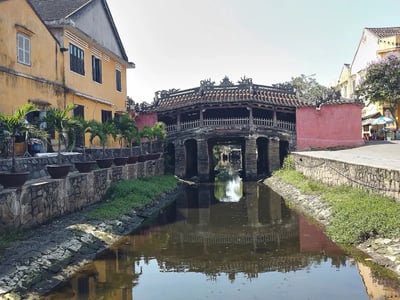
Da Nang is the centre's hub: city beaches, the Marble Mountains, and Ba Na Hills with the Golden Bridge — Vietnam's most photographed ticket. Pair it with Hoi An, the lantern-lit old town 45 minutes away, for the prettiest evening in Vietnam.

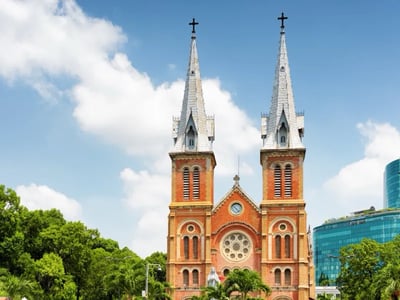
Ho Chi Minh City (Saigon) is the fast, modern south — war museums, rooftop bars, and Cu Chi tunnel tours. Phu Quoc island tops it off with beaches, the world's longest oversea cable car, and Sunset Town — plus its own 30-day visa-free entry scheme for direct arrivals.

Second-trip Vietnam: Sapa for rice-terrace trekking and the Fansipan cable car in the far north, Nha Trang for the VinWonders island theme park, and Da Lat — a cool-air French hill station famous for coffee.

Money and payments

Vietnam runs on cash and QR codes — but the QR systems are local bank apps, so visitors mostly pay with cash and cards. Carry dong: ₫100,000 is about $3.80. The zeros are dangerous; a common tourist mistake is handing over a 500,000 note thinking it is 50,000. Sort notes by colour on day one.

Cards work at hotels and bigger restaurants, often with a 2-3% surcharge. Exchange at banks or the licensed gold shops in tourist areas, and use bank ATMs for top-ups.

Vegetarians should learn one word: "chay". Com chay (veg rice) eateries exist in every town, often near pagodas. Fish sauce is the hidden ingredient everywhere else — ask for dishes without "nuoc mam".

What things cost

A comfortable day in Vietnam costs about ₫800,000-1,300,000 ($31-$50) per person, hotel included. Backpackers manage on half that. Sample prices:

  • Bowl of pho or a banh mi: ₫40,000-80,000 ($1.50-$3)
  • Vietnamese coffee: ₫30,000-60,000 ($1.20-$2.30)
  • Mid-range hotel double: ₫600,000-1,200,000 ($23-$46) a night
  • Ha Long Bay day cruise with transfers: roughly ₫900,000-1,400,000 ($35-$55)
  • Ba Na Hills entry with cable car: roughly ₫900,000-1,000,000 ($35-$40)

Two costs surprise people. Tailoring in Hoi An is cheap — a made-to-measure shirt runs ₫400,000-700,000 ($15-$27). And the big branded attractions cost close to Thai prices, so budget for them separately rather than assuming everything is $2.

Getting around

Between regions, fly. Vietjet and Vietnam Airlines connect Hanoi, Da Nang, Ho Chi Minh City and Phu Quoc with 1-2 hour hops from around ₫500,000 ($19) one way when booked early. The Hanoi-Da Nang overnight train is the scenic 16-hour alternative.

Inside cities, Grab (car and bike) is cheap and honest: a 15-minute ride runs ₫30,000-₫60,000 ($1.20-$2.30). In Hanoi's Old Quarter and Hoi An you mostly walk.

Ha Long Bay, Ninh Binh, Cu Chi and Ba Na Hills all work best as day tours with hotel pickup — public transport to them is not tourist-friendly.

Buy a local eSIM or SIM on arrival — around ₫100,000-₫150,000 ($4-$6) buys a tourist package with more data than you will use. Grab, translation and QR menus all assume you are online.

Vietnam with kids

Vietnam works well for families if you base by the beach and keep transfers short. Da Nang is the best family base: sandy city beaches with lifeguard flags, resort pools, and the big sights under an hour away, with Hoi An's car-free old-town evenings close by. Phu Quoc is the fly-and-flop pick — resort pools, a theme park and a safari park on one island.

By age: toddlers stay happiest on the Phu Quoc or Da Nang pool-and-beach rhythm. Ages 6-12 get the most from Ba Na Hills, VinWonders and Hoi An's basket-boat rides and lantern workshops. Teens can take an overnight Ha Long cruise with kayaking.

The real hazard is crossing Hanoi and Saigon streets through the motorbike swarm — hold hands and walk at a steady pace, and skip the Old Quarter with a stroller, since pavements are parked solid with bikes. Central beaches turn rough from September to November; swim where flags are posted. Keep kids on bottled water.

One tip: take the first Ba Na Hills cable car of the day — queues and heat both build by mid-morning.

A simple first-trip route

The best 7-day first trip pairs the north with the centre. Days 1-2: Hanoi — the Old Quarter, egg coffee, a water puppet show. Day 3: Ha Long Bay day cruise, or upgrade to an overnight boat. Day 4: fly to Da Nang, about 1 hour 20 minutes. Days 5-6: Ba Na Hills one day, the Marble Mountains and beach the next, with evenings in Hoi An. Day 7: fly out of Da Nang or connect through Hanoi.

With 10 days, add Ninh Binh from Hanoi and slow the Hoi An end down. With 4-5 days, pick one region only — Hanoi plus Ha Long, or Da Nang plus Hoi An. Skip Ho Chi Minh City on a north-centre trip; the extra flight eats a full day of a short holiday.

Good to know

At a Glance

Best Time

November to April for most routes — but seasons differ by region

Currency

Vietnamese Dong (VND); roughly $1 = ₫26,000 (rates move — check before you go)

Visa

Visa-free 45 days for 25+ nationalities (UK, most of the EU, Japan, South Korea and more); 90-day e-visa online for everyone else

Timezone

GMT+7

Flight Time

Around 12 hours from London, 4.5 hours from Delhi, 2 hours from Singapore

Good to know

Frequently Asked Questions

Online now

We're here for you, 24/7

Real humans on WhatsApp and phone — before, during and after your trip. We typically reply in minutes.