
Skip to content
ReadyTrip
Singapore

destination

Singapore

Overview

Singapore is the easiest country in Asia to plan. English is an official language, public transport is spotless and runs everywhere, and most nationalities walk in visa-free. It is also a city-state: the whole country is one city, so this page covers the planning — entry rules, weather, money, and how Singapore fits into a bigger trip — and our Singapore city page covers the attractions and tickets.

Budget honestly: Singapore is expensive by Asian standards. Rooms and attraction tickets cost closer to Dubai than to Bangkok. The savings live in hawker food and the MRT, which are excellent and cheap.

Cities to Explore

Visa and entry rules

Most visitors don't need a visa for Singapore. Citizens of around 160 countries — including the US, UK, most of Europe, Australia, Japan and most of Southeast Asia — enter visa-free, for 30 or 90 days depending on nationality (the US, UK, EU and Australia get 90). A shorter list of nationalities, including India, must arrange an e-visa before flying, applied through agents authorised by Singapore's immigration authority (ICA).

One requirement applies to everyone: submit the free SG Arrival Card online within 3 days before you arrive. It's a declaration, not a visa — you fill it in on the ICA website or the MyICA app, and airlines can ask to see it at check-in. Your passport needs at least 6 months' validity.

Rules can change, so check the ICA site for your nationality before booking non-refundable flights.

Best time to visit

There is no bad month, only wetter and drier ones. February to April is the driest window; November to January is the wettest, when the northeast monsoon brings more frequent downpours. Rain almost always comes as short, heavy bursts — not washed-out days.

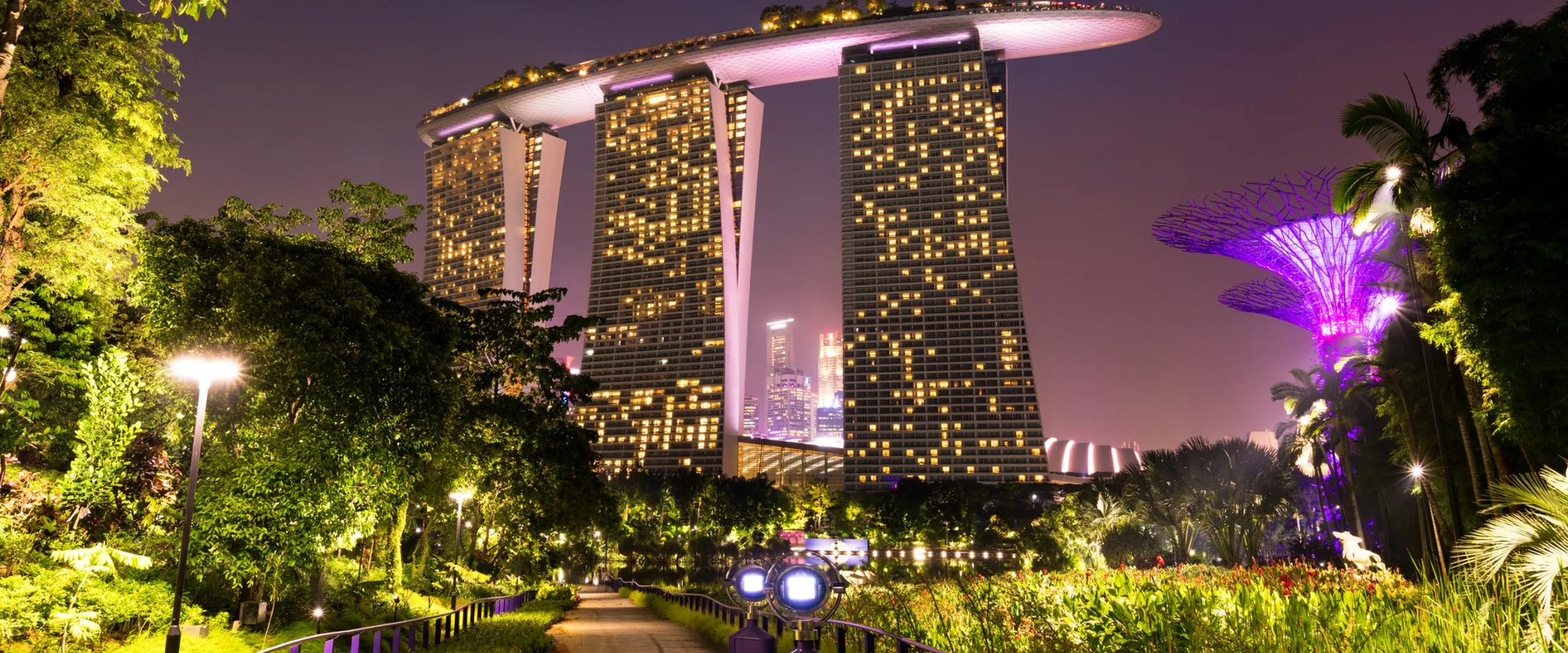
Temperatures sit at 30-32°C with heavy humidity all year, so build days around it: outdoor sights in the morning, malls and indoor attractions after lunch, and the free light shows — Gardens by the Bay's Garden Rhapsody and Marina Bay's Spectra — after dark.

Crowds and airfares peak in December, when Orchard Road's Christmas lights go up, and again around regional school holidays in May-June. Attraction prices barely move by season; flight prices do, so book 6-8 weeks out.

Money and payments

Singapore runs almost entirely cashless. Contactless cards work everywhere from taxis to MRT gates, so most visitors never touch an ATM. Carry S$50-S$100 ($40-$75) in cash for hawker stalls and small shops, and that's it.

The exchange rate is what makes Singapore feel pricey: S$1 is about $0.77. A hawker-centre meal runs S$4-S$6 ($3-$4.50) — the best food value in the city and safe everywhere. A sit-down restaurant meal starts around S$25 ($19).

What things cost

Plan on S$250-S$400 ($190-$310) per person per day with a mid-range hotel, or S$120-S$180 ($90-$140) with a budget hotel and hawker meals. Sample prices:

  • Hawker meal (chicken rice, laksa): S$4-S$6 ($3-$4.50)
  • Kopi at a hawker centre: S$1.50-S$2.50 ($1.20-$2)
  • MRT ride: under S$2.50 ($2)
  • Mid-range hotel double: S$200-S$350 ($155-$270) a night
  • Gardens by the Bay conservatories: roughly S$50-S$60 ($40-$47) for both domes
  • Universal Studios Singapore: roughly S$80-S$90 ($60-$70) for a one-day ticket
  • Singapore Zoo or Night Safari: roughly S$50-S$60 ($40-$47)

The pattern is clear: rooms and big tickets cost real money, food and transport barely register. Lean into the free layer — the outdoor gardens at Gardens by the Bay, both nightly light shows, the Marina Bay waterfront walk, and Jewel's waterfall at Changi cost nothing.

Two ways to cut the ticket bill: book attractions online before you go rather than at the gate, and plan one big-ticket day per two days of trip. The cheap-and-free half of Singapore fills the rest easily.

Food to try

Start at a hawker centre — Maxwell, Lau Pa Sat or Old Airport Road — and eat like a local for about S$5 ($4) a plate. The essentials: Hainanese chicken rice, laksa (spicy coconut noodle soup), char kway teow (fried flat noodles), and satay skewers after dark. Chilli crab is the famous splurge; it is restaurant food priced by weight, so expect S$60-S$90 ($47-$70) for one crab shared between two.

Vegetarians may find Singapore the easiest country in East Asia. Little India runs on pure-veg South Indian kitchens, with dosa and thali meals at S$6-S$10 ($4.50-$8), and most hawker centres have at least one veg stall.

Getting there and around

Changi is one of the best-connected airports on earth, with direct flights from most major hubs in Asia, Europe, Australia and North America. Jewel's 40-metre indoor waterfall sits before immigration on departure, so arrive 3 hours early on your last day and treat it as your final stop.

From the airport, the MRT reaches the city centre in about 40 minutes for under S$2.50 ($2) — tap in with any contactless bank card, no tourist card needed. Grab (the regional ride-hailing app) covers late-night arrivals; a ride downtown runs about S$30-S$40 ($23-$31). Once you're in, nothing in the country is more than an hour from anything else. Neighbourhood-level transport tips are on the city page.

Singapore with kids

Singapore may be the easiest city in Asia with kids: safe, stroller-friendly, and dense with attractions built for them. Stay near any central MRT stop for sightseeing, or on Sentosa itself if the trip is mostly Universal Studios and beaches — Sentosa hotels cost more but delete the daily commute.

By age: toddlers get the free Jacob Ballas Children's Garden and the zoo's family facilities. Ages 6-12 are well suited to Universal Studios, Singapore Oceanarium and Science Centre. Teens may prefer Night Safari, the Sentosa luge and the larger rides.

There is no real safety worry beyond heat: kids dehydrate faster than adults, so the morning-outdoors rule above matters double. Every MRT station has lifts, and tap water is safe to drink — carry refillable bottles and skip buying water entirely.

One tip: reach the zoo or Universal Studios at opening on a weekday. The first two hours are the coolest and emptiest you will get, and a toddler's nap can absorb the midday peak.

Where Singapore fits in a Southeast Asia trip

Singapore is a complete 4-5 day trip on its own, and the region's best hub for a two-country holiday. The classic extension is Malaysia: Kuala Lumpur is about an hour's flight or a 5-hour coach ride, and Johor — home of Legoland Malaysia — is right across the causeway, doable as a day trip if you start early — the border crossing is the slow part.

For a beach break, the Indonesian islands of Bintan and Batam are about an hour by ferry from Singapore's Tanah Merah and HarbourFront terminals. Bintan is the resort island; Batam is cheaper and closer. Both are a border crossing, so check Indonesian entry rules for your nationality.

Going further, Bangkok is a 2.5-hour flight, and cruises to Malaysian and Thai ports leave from Marina Bay Cruise Centre — an easy add-on for families.

Good to know

At a Glance

Best Time

February to April is driest; hot and humid year-round, so no bad month

Currency

Singapore Dollar (SGD); roughly $1 = S$1.29 (rates move — check before you go)

Visa

Visa-free for most nationalities (30 or 90 days); everyone submits the free SG Arrival Card online before landing

Timezone

GMT+8

Flight Time

Well connected worldwide — around 13 hours from London, 5.5 hours from Delhi, 8 hours from Sydney

Good to know

Frequently Asked Questions

Online now

We're here for you, 24/7

Real humans on WhatsApp and phone — before, during and after your trip. We typically reply in minutes.