Skip to content
ReadyTrip
Osaka

city

Osaka

Japan's street-food capital, with Universal Studios next door

Overview

Osaka in brief

Osaka is Japan with its tie loosened. The city's own slogan is kuidaore — 'eat until you drop' — and its neon canal district Dotonbori is the country's street-food stage. It is also the practical base for the Kansai region: Kyoto and Nara are under an hour away, and Universal Studios Japan is inside the city.

Fly into Kansai International (KIX), which has direct flights from major hubs across Asia and one-stop connections from most of the world. The airport train reaches Namba in about 40 minutes. Hotels here cost noticeably less than Tokyo's, which is why many travellers make Osaka their longest stop.

Good to know

At a Glance

Best Time

March-April and October-November

Getting There

Fly into Kansai (KIX) — direct from major Asian hubs, one-stop from most others

Local Transport

Osaka Metro + JR loop line with an ICOCA card

Ideal Days

2-3 days, plus day trips to Kyoto and Nara

Top Osaka attractions

Top things to do in Osaka

Universal Studios Japan — home of Super Nintendo World and the Wizarding World of Harry Potter. One-day tickets about ¥8,600-10,900 ($53-$67). Arrive at opening; Nintendo World often needs a timed-entry slot booked in the app.

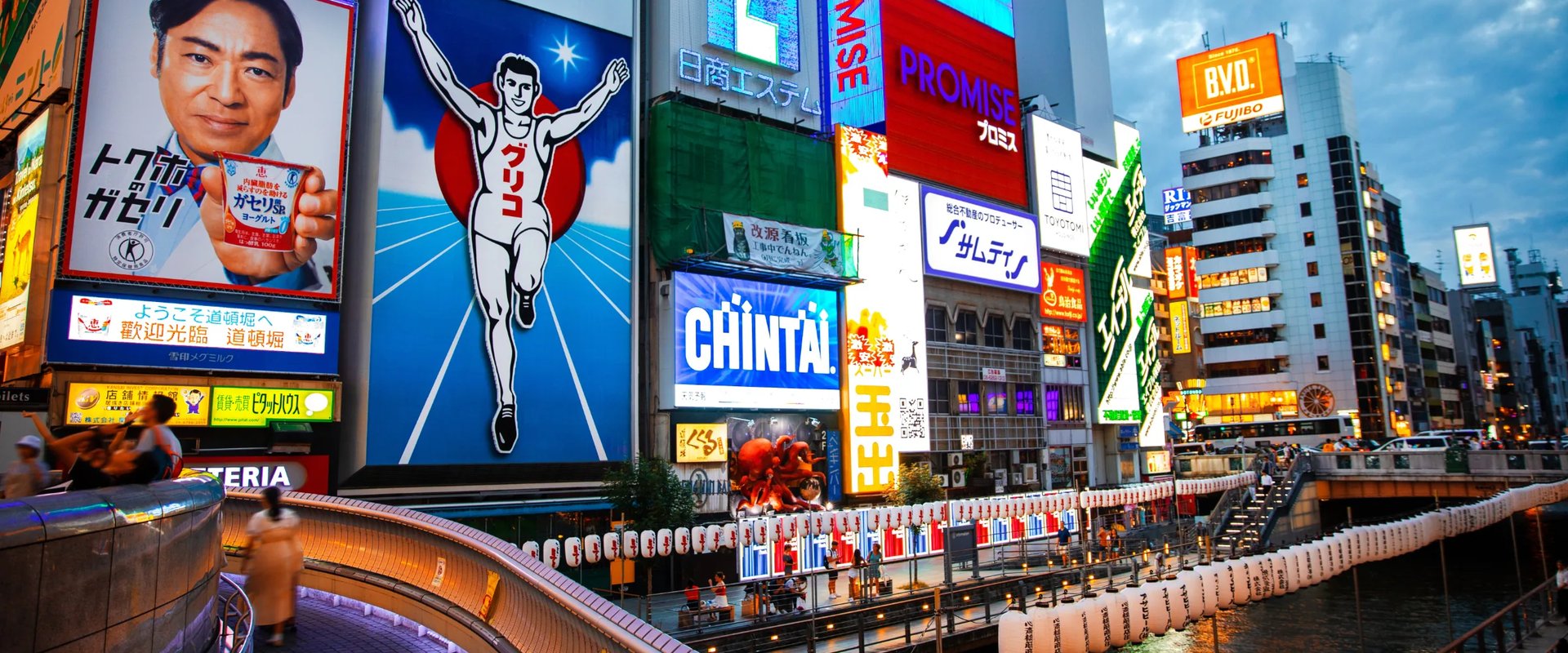
Dotonbori and the Glico Man — the canal strip of giant moving crab signs and food stalls. Free to wander, and the best single evening in the city. Budget ¥1,700-2,500 ($10-$15) for a stall-hopping dinner.

Osaka Castle — the white-and-gold keep above a moated park. Museum entry about ¥600 ($4); the park and views are free. The climb is worth it for first-timers, though the interior is a modern museum, not period rooms.

Osaka Aquarium Kaiyukan — one of the world's largest aquariums, built around two whale sharks in a 9-metre-deep tank. About ¥2,700 ($17). The best indoor half-day in Osaka with kids.

Umeda Sky Building — a rooftop ring 173 metres up, connecting two towers, with an open-air 360° walk. About ¥2,000 ($12). Pick sunset; it beats being sealed behind glass.

Shinsekai and Tsutenkaku Tower — the retro 1950s district for kushikatsu (fried skewers) at half of Dotonbori's prices. Skip the tower's paid deck if you have already done Umeda — the streets are the attraction.

Kuromon Market — Osaka's 190-year-old covered food market, ten minutes' walk from Dotonbori. A grazing breakfast or lunch runs about ¥1,200-1,800 ($7-$11); grilled scallops and wagyu skewers are the stars, and fruit stalls cover vegetarians. Go before noon — many stalls shut by mid-afternoon.

Namba Yasaka Shrine and Shitenno-ji — Namba Yasaka's giant lion-head stage is a free five-minute detour from Dotonbori and a favourite photo stop. Shitenno-ji, founded in 593, is Japan's oldest state temple; the inner precinct costs about ¥300 ($2). Both are quick, quiet breaks from the neon.

Best time to visit

March-April brings cherry blossoms to the castle park, and October-November gives clear, mild days — those are the two best windows. Both are busy; book hotels 2-3 months out.

June is rainy and July-August is hot and sticky, though USJ and the aquarium stay comfortable as indoor-heavy days. Winter is cold but cheap, and illumination displays run along Midosuji boulevard from November into the new year.

Getting around

Buy an ICOCA card (Kansai's version of Suica) at the airport and tap through the metro and JR loop line. Rides cost about ¥190-290 ($1.20-$1.80). Nearly everything a visitor wants sits near two hubs — Namba/Dotonbori in the south and Umeda in the north, 8 minutes apart on the red Midosuji line.

For a sightseeing-heavy day, the Osaka Amazing Pass (about ¥2,800 / $17) bundles the metro with 40+ paid attractions including the castle and Umeda Sky Building.

Day trips from Osaka

Nara is the closest big reward: about 45 minutes on the Kintetsu line from Namba (roughly ¥700-800 / $4-$5 each way) for the bowing deer of Nara Park and the giant bronze Buddha at Todai-ji, entry about ¥800 ($5). Half a day is enough; mornings are calmer.

Himeji has Japan's finest original castle — a white six-storey keep that survived the wars intact. Entry is about ¥1,000 ($6), and the Shinkansen from Shin-Osaka takes around 30 minutes. It beats Osaka Castle for anyone who wants the real thing rather than a museum in a replica shell.

Kobe is 20 minutes away and exists, for most visitors, as a beef dinner. Wagyu lunch sets are the affordable way in, roughly ¥5,000-8,000 ($30-$50) — half the price of the same beef at dinner. Kyoto, 15-30 minutes by train, is the biggest day trip of all and has its own guide below. All of these run on ordinary trains, so no rail pass is needed from an Osaka base.

Osaka with kids

Osaka is the best Japan stop for kids, and Universal Studios is the reason. Check height cut-offs before you promise rides — Mario Kart needs 107 cm with an adult, and the biggest coasters need 122-132 cm — while the Universal Wonderland zone keeps under-7s happy all day. Price the Express Pass for any weekend visit; the queue tactics in Common mistakes below matter double with children.

For under-8s, the aquarium's whale sharks beat any ride. Kids Plaza Osaka, a hands-on children's museum in the north of the city (about ¥1,400 / $9 for adults, less for kids), rescues rainy days.

Stay in Namba, the same first-timer pick as the stay FAQ — flat streets, food kids recognise, one direct metro line north. The station itself is a maze, so allow extra time with a stroller. Pace it as one park day, then one easy city day; back-to-back big days break kids and parents alike.

Common mistakes in Osaka

Underestimating Universal Studios queues is the big one. On weekends and holidays the popular rides pass 2-hour waits — enter at opening, grab the Nintendo World timed slot in the app immediately, and price the Express Pass before you write it off.

Eating only in Dotonbori is the second. It is the show, but Shinsekai and Kuromon serve the same dishes cheaper and better. Two smaller traps: the Amazing Pass does not cover Universal Studios, so don't buy it for a park day, and escalator etiquette flips here — Osaka stands on the right, the opposite of Tokyo.

Osaka is also a late city. The castle museum and most temples close around 5pm, so do sights by day and save Dotonbori, Shinsekai and the Umeda rooftop for after dark. Buy USJ tickets online before the trip too — gate sales can pause entirely on sold-out days.

Where it fits in your trip

Osaka is the final act of the classic Tokyo-Kyoto-Osaka route: land in Tokyo, Shinkansen to Kyoto, finish here and fly home from KIX. That order avoids backtracking entirely.

It also works the other way round: base yourself in Osaka for 4-5 nights and day-trip to Kyoto (15 minutes by Shinkansen, 30 by local train) and Nara (45 minutes). Visa rules, rail passes and money tips are on our Japan page.

Good to know

Frequently Asked Questions

Online now

We're here for you, 24/7

Real humans on WhatsApp and phone — before, during and after your trip. We typically reply in minutes.