Skip to content
ReadyTrip
Jeju

city

Jeju

Korea's volcanic holiday island of craters, waterfalls and beaches

Overview

Why visit Jeju

Jeju is South Korea's holiday island — a volcanic landscape of crater peaks, black-lava cliffs, waterfalls and beaches an hour's flight south of Seoul. Koreans treat it as their Hawaii, and it earned UNESCO natural heritage status for its lava tubes and the Hallasan volcano at its centre.

Jeju adds nature and sea air to a Seoul-Busan city itinerary. Three days covers the highlights if you plan by region: east, south, and the middle.

Good to know

At a Glance

Best Time

April-June and September-November

Getting There

One-hour flights from Seoul and Busan — one of the world's busiest air routes

Ideal Days

3 days

Getting there and entry

Flights are the only practical way in: about an hour from Seoul or Busan, often ₩30,000-₩60,000 ($20-$40) one way when booked ahead. Book early around Korean holidays, when the whole country seems to fly to Jeju at once.

The island also has an entry rule of its own. As a special self-governing province, Jeju admits most nationalities visa-free for up to 30 days if they fly in direct from abroad — even some that need a visa for mainland Korea. The catch: that visa-free entry does not let you continue to the mainland. Arriving via Seoul or Busan, the normal rules on our South Korea page apply. Entry rules can change, so check before booking.

Top things to do in Jeju

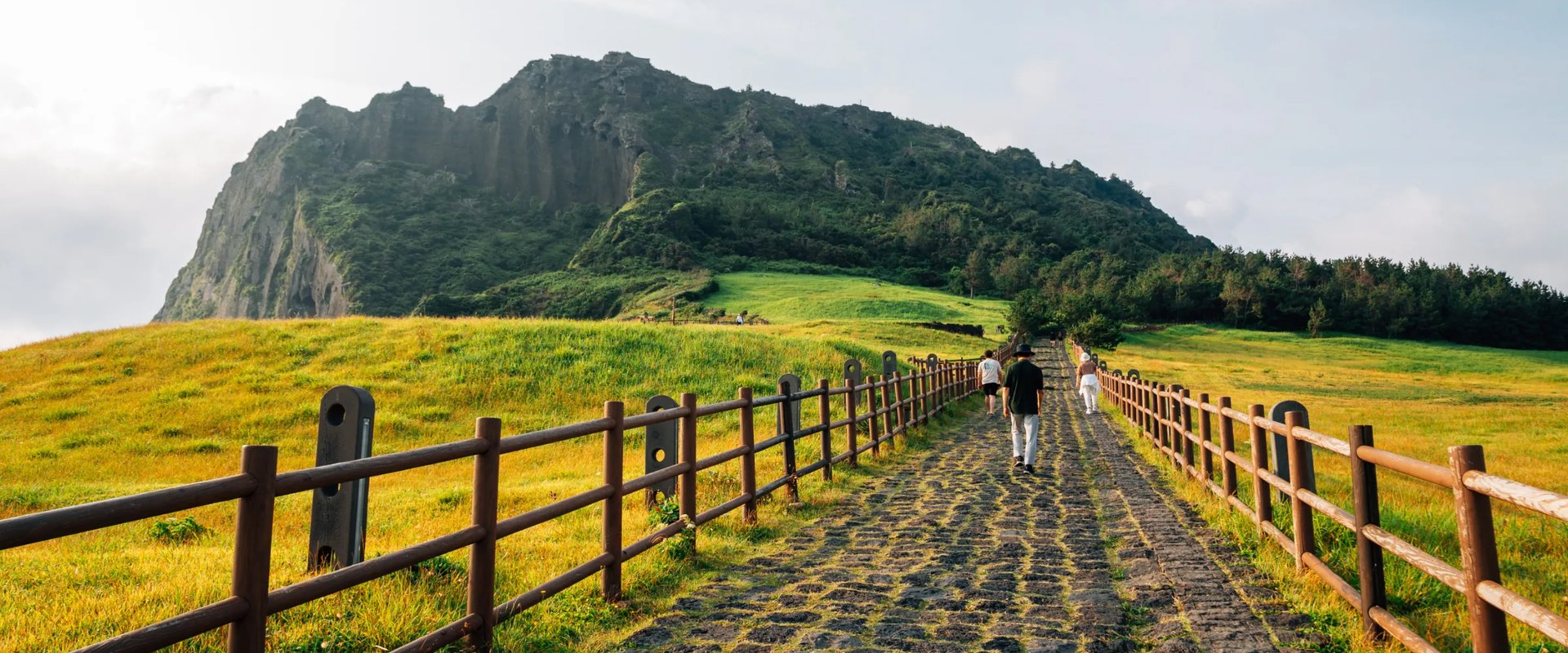
Climb Seongsan Ilchulbong (Sunrise Peak). This tuff cone rising from the sea is Jeju's icon. The stair climb takes 25-30 minutes and the crater-rim view is worth every step; sunrise is the classic time, but any clear morning is good. Entry is cheap — around ₩5,000 ($3).

Take the ferry to Udo island, 15 minutes from Seongsan port. Rent an electric bike or hop the loop bus for white-coral beaches and peanut ice cream — an easy, fun half-day.

See the Seogwipo waterfalls. Cheonjiyeon and Jeongbang (which drops straight into the sea) sit near Seogwipo town on the south coast, alongside the hexagonal lava columns of Jusangjeolli cliffs.

Walk in Hallasan National Park. The full summit hike is a serious day, but shorter trails like Yeongsil reward with volcanic ridges in half the time. In town-sized doses, the Manjanggul lava tube lets you walk inside a kilometre of cooled lava pipe.

Jeju also has Korea's quirkiest museum scene — teddy bears, optical illusions, chocolate — which is handy on a rainy afternoon with kids. Beach-wise, Hyeopjae (west) and Hamdeok (north-east) are the clear-water picks.

Best time to visit

April to June brings mild weather, canola flowers and green fields; September to November gives clear skies and silvergrass on the crater hills — these are the two best windows. July and August are warm beach months but also the wettest, with typhoon risk in late summer. Winter is quiet and cold, though snow-capped Hallasan and winter camellias have their own fans.

Combine Jeju with Seoul and Busan — one-hour flights connect it to both, making the classic Korea triangle.

Good to know

Frequently Asked Questions

Online now

We're here for you, 24/7

Real humans on WhatsApp and phone — before, during and after your trip. We typically reply in minutes.