Skip to content
ReadyTrip
South Korea

destination

South Korea

Overview

South Korea packs three very different trips into one country: Seoul's 600-year-old palaces and neon shopping streets, Busan's beaches and seafood markets, and Jeju's volcanic island scenery.

Entry is visa-free for more than 100 nationalities, flights connect well from most of Asia, Europe, North America and Australia, and costs sit comfortably between Southeast Asia and Japan. The best windows are April-May and September-November. This page covers entry rules, the cities we sell tickets in, money, and how to get around.
Cities to Explore

Visa and entry rules

Most tourists don't need a visa for South Korea. Citizens of more than 100 countries enter visa-free for short stays. The usual extra step is the K-ETA — an online travel pass costing ₩10,000 (about $7) that you apply for at least 72 hours before flying.

There's a generous twist right now: through 31 December 2026, South Korea has suspended the K-ETA requirement for 22 countries and regions, including the US, UK, Canada, Australia, Japan, Singapore, Hong Kong, Taiwan and most of Western Europe. Those passport holders currently board with just a passport. Everyone else on the visa-waiver list still applies for the K-ETA online.

Nationalities outside the waiver list need a tourist visa arranged in advance through a Korean embassy or its designated visa centres — there is no visa on arrival. One island-sized exception: Jeju has its own entry rule and admits most nationalities visa-free for up to 30 days if they fly in direct from abroad (more on the Jeju page).

These rules have shifted more than once — the K-ETA exemption is an extension announced in early 2026 — so confirm your nationality's current requirements on the official K-ETA site before booking non-refundable flights.

Best time to visit

April-May and September-November are the two windows worth flying for. Spring brings cherry blossoms (Seoul usually blooms in early April) and 15-22°C days. Autumn turns the palace grounds and Nami Island red and gold, with crisp, clear weather.

Skip late July and August if you can: hot, humid and the rainy season, with typhoon risk in the south. Winter (December-February) drops below zero — harsh if you're unprepared, but it is ski-resort season and flights and hotels are at their cheapest.

Two calendar notes. Korean holiday weeks — Seollal (Lunar New Year) and Chuseok (autumn harvest; both shift each year) — pack all transport and close many shops, so check the dates before locking your week. And major palaces close one day a week — Gyeongbokgung on Tuesdays.

Top cities

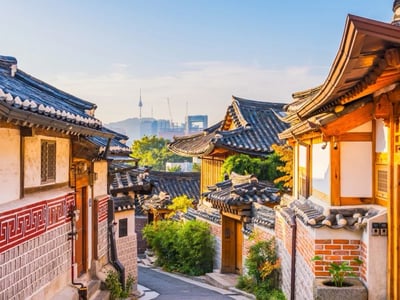
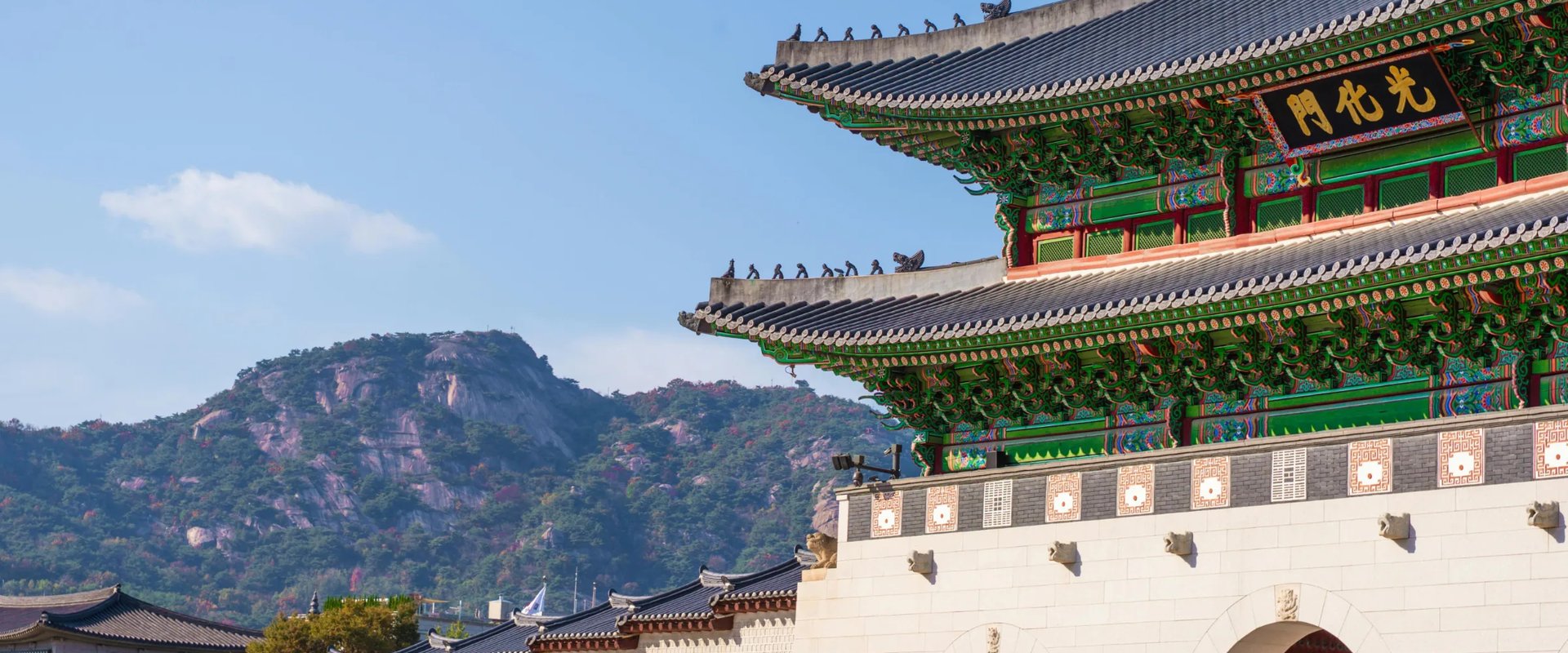
Seoul deserves 4 days: Gyeongbokgung Palace (entry is free if you wear a rented hanbok), N Seoul Tower, Bukchon's hanok lanes, Myeongdong street food, and day trips to Nami Island or the DMZ. Lotte World and Everland cover the theme-park quota.

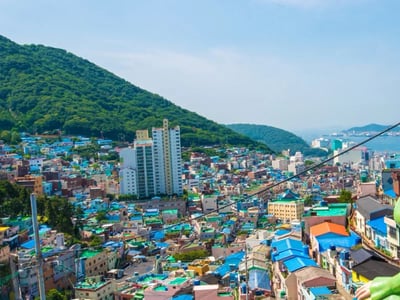
Busan is Korea's beach city, 2.5 hours from Seoul by KTX train: Haeundae beach, the cliffside Haedong Yonggungsa temple, and the rainbow-painted Gamcheon Culture Village.

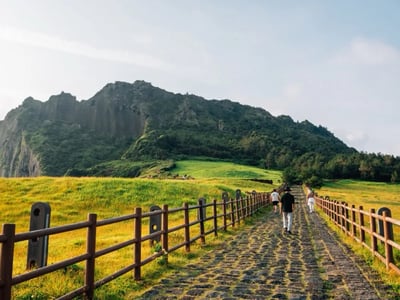
Jeju is the holiday island — a one-hour flight from Seoul, often ₩30,000-₩60,000 ($20-$40) one way when booked ahead. Waterfalls, lava tubes, Hallasan volcano hikes, and beaches.

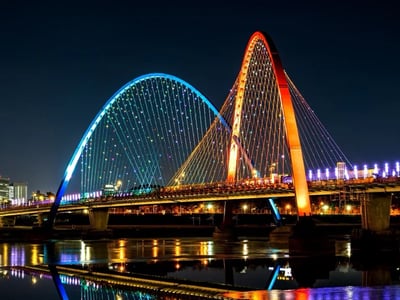
We also list Incheon — the airport city, with its own Chinatown and Songdo's futuristic skyline for a layover day — and Gyeongju, the ancient Silla capital an hour from Busan, where royal burial mounds and the Bulguksa temple make Korea's best history stop.

South Korea with kids

South Korea is an easy family trip, and Seoul works as the single base for a full week. Lotte World sits inside the city with a large indoor section — it rescues a rainy or freezing day. Everland, Korea's biggest park, is about an hour south in Yongin: go on a weekday and take the direct shuttle bus rather than wrestling with transfers.

By age: toddlers do best at the free Seoul Children's Grand Park and Lotte World's indoor zone; kids 6-12 get the most from Everland's rides and animal safari; teens come for the coasters, the K-pop shops in Myeongdong and Hongdae, and Han River bike rentals. Busan adds beaches.

Two honest notes. Metro transfers mean long corridors and real stairs, so bring a light folding stroller. And much Korean food is spicy — gimbap, fried chicken and bulgogi are the safe orders for picky kids.

Money and payments

Korea is card-everything — even street-market stalls usually take cards. ₩10,000 is about $7, though the rate moves. Some foreign cards do fail at small local terminals, so carry ₩100,000-₩200,000 ($65-$130) in cash as backup.

Load a T-money card (sold at every convenience store) for metro, bus and even taxi payments. Budget roughly ₩60,000-₩90,000 ($40-$60) per person per day for food, transit and one paid sight, hotels extra. Convenience-store meals and market food — Gwangjang market's bindaetteok and tteokbokki — keep costs low and are half the fun.

Vegetarians need a little care: meat stock and fish sauce hide in many "vegetable" dishes. Temple-food restaurants and bibimbap ordered without meat and egg are the reliable options, and big cities have a growing vegan scene.

Food to try

Korean barbecue is the meal to build an evening around: pork belly (samgyeopsal) grilled at your table, usually ₩15,000-₩20,000 ($10-$13) per person. Fried chicken with beer — "chimaek" — is the casual night out, and delivery to your hotel works too.

Solo diners do fine. Bibimbap, kimchi stew and cold naengmyeon noodles cost ₩8,000-₩13,000 ($5-$9) at ordinary lunch spots, and most have picture menus. In Busan, try hotteok — sweet fried pancakes stuffed with seeds and nuts — from the BIFF Square stalls.

Vegetarians should lean on the temple-food and no-meat bibimbap options covered above. Learn one phrase: "gogi ppaego" — without meat.

Getting around

Seoul's metro is world-class and bilingual — signs and announcements in English, fares around ₩1,400-₩1,900 ($1-$1.30) per ride with a T-money card. Use Naver Map or Kakao Map for directions; Google Maps is heavily restricted in Korea and will fail you for walking and driving routes.

Between cities, the KTX bullet train does Seoul-Busan in 2.5 hours for about ₩60,000 ($40) in standard class. For Jeju, fly — Seoul-Jeju is the world's busiest air route and fares are commuter-cheap when booked ahead.

Taxis are metered and reasonable for short hops — the base fare in Seoul is around ₩4,800 ($3). Hail them with the Kakao T app, and show your destination in Korean from your map app, as drivers' English is limited.

Set your phone up before you land: download Naver Map, Kakao Map and Papago (the translation app that actually handles Korean), and buy an eSIM or airport SIM — tourist data packs run around ₩15,000-₩25,000 ($10-$17). Korea runs on apps more than almost anywhere, and the global ones mostly don't work.

A simple first-trip route

With 7 days, split Seoul and one other stop. Days 1-4 in Seoul: two palace-and-market days, one theme-park day, one day trip to Nami Island or the DMZ. Then take the KTX to Busan for days 5-7, or fly to Jeju instead.

Busan is the simpler pick — no airport time, and you can fly home from Busan's own international airport or KTX back. Jeju suits hikers and couples, but the flight and transfers eat half a day each way.

With 10 days, do the full triangle: Seoul, KTX to Busan, then the short flight from Busan to Jeju, and fly back to Seoul at the end. If history is your thing, slot Gyeongju in between Seoul and Busan — it's an hour from Busan.

Good to know

At a Glance

Best Time

April-May (spring blossoms) and September-November (autumn colours)

Currency

Korean Won (KRW); roughly $1 = ₩1,500 (rates move — check before you go)

Visa

Visa-free for 100+ nationalities; most apply online for the K-ETA pass, and 22 countries (US, UK, most of Western Europe and more) skip even that through 2026. Others need a visa — check current rules

Timezone

GMT+9

Flight Time

Well connected worldwide — around 11 hours from London, 7 hours from Delhi, 6.5 hours from Singapore

Good to know

Frequently Asked Questions

Online now

We're here for you, 24/7

Real humans on WhatsApp and phone — before, during and after your trip. We typically reply in minutes.