Skip to content
ReadyTrip
Macau

destination

Macau

Overview

Macau is the easiest second stop you can bolt onto a Hong Kong trip: visa-free for most nationalities, one hour away by ferry, and a city where Portuguese plazas and mega-casino resorts sit ten minutes apart. Most travellers give it one full day or one night, and that's about right.

Macau is a city-territory, so this page covers the planning side — entry rules, the crossing from Hong Kong, money, and timing. The sights, shows and tickets live on our Macau city page.

Cities to Explore

Visa and entry rules

Most visitors don't need a visa for Macau. Citizens of 80+ countries enter visa-free: around 30 days for the US, Canada, Australia, India and most Asian passports, 90 days for most EU passports, and up to 6 months for UK passports. Most nationalities outside that list can get a visa on arrival at the border.

Arriving from Hong Kong changes nothing on the Macau side, but it does mean you exit and re-enter Hong Kong. Check that your Hong Kong visa or entry scheme allows multiple entries before planning a day trip — for most visa-free nationalities it does.

Carry your passport, not a copy. The ferry terminals and the bridge port are full immigration checkpoints in both directions, and hotels ask for the passport too. Entry rules can change, so confirm your nationality's current terms on Macau's official immigration pages before booking.

Best time to visit

October to December is the best window: dry, clear, 18-26°C, with the Macau Grand Prix in November adding buzz (and hotel-price spikes on race weekends). It matches Hong Kong's best season, which is convenient since the two trips are usually combined.

June to September is hot, humid and typhoon season. When a strong typhoon signal is raised, ferries stop and the bridge closes to buses — so in these months, keep your Macau day flexible rather than locking it to the day of your flight home.

Avoid Lunar New Year and the early-October Golden Week. Mainland Chinese holiday crowds fill Macau in those weeks and hotel prices can triple. Any ordinary midweek day beats them — Macau hotels are far cheaper Monday to Thursday than on weekends.

Getting there from Hong Kong

The ferry is the classic route: about 1 hour from Hong Kong's Sheung Wan or Tsim Sha Tsui terminals, around HKD 175 ($22) each way, with sailings every 30 minutes or so until late evening. Ferries land at the Outer Harbour terminal, closest to the old town. Book your return seat in advance on weekends — evening boats back sell out.

The Golden Bus crosses the 55-km Hong Kong–Zhuhai–Macau bridge in about 40 minutes for around HKD 65 ($8), and it runs 24 hours. It's the cheap option and the late-night fallback, and the Macau bridge port sits closer to the Cotai resorts. Door to door it often takes as long as the ferry once you add the transfers to the bridge terminals.

Macau also has its own airport with direct flights from many Asian cities — Bangkok, Singapore, Taipei, Seoul and more. From further away, fly to Hong Kong and cross; the bridge bus also connects directly to Hong Kong's airport, which makes "fly into Hong Kong, fly home from Hong Kong, Macau in the middle" an easy loop.

Money and payments

Skip the pataca. Macau's own currency (MOP) is pegged near MOP 8 to $1 via the Hong Kong dollar, and HKD is accepted 1:1 almost everywhere — casinos, shops, restaurants, taxis. You only need MOP for public buses and small change, and leftover patacas are hard to exchange once you leave.

Cards work in resorts, hotels and larger restaurants. The old-town food streets and small shops prefer cash. A realistic day-trip budget is MOP 700-1,000 (about $90-$125) per person, covering the return crossing, street food and one paid attraction.

Casinos are free to walk through — watching, not playing, is the budget option. You must be 21 or older to enter gaming floors; under-21s can still use the resorts' malls, shows and restaurants.

Food to try

The Portuguese egg tart is Macau's signature — flaky pastry, caramelised custard, around MOP 12-15 ($1.50-$2) each. Lord Stow's in Coloane and Margaret's near Senado Square are the two famous makers, and locals argue over which is best.

The pork chop bun is the other must: a fried chop in a crusty roll, best in Taipa Village. Macanese cuisine — a 400-year-old Portuguese-Cantonese fusion — adds minchi (minced meat over rice with a fried egg) and African chicken in a spiced sauce. Almond cookies from the Rua do Cunha shops in Taipa are the standard souvenir.

Vegetarians have thin options in the old-town food streets. The Cotai resorts' food courts are the reliable fallback, with labelled menus and Indian and East Asian veg counters.

Macau with kids

Macau is better with kids than its casino image suggests, and the family sights cluster neatly. Toddlers get the Giant Panda Pavilion in Coloane and the indoor gondola rides at the Venetian. Kids 6-12 do best at the Macau Science Center on the Outer Harbour waterfront and the Cotai resorts' free light-and-fountain shows. Teens rate Macau Tower's glass-floor deck and skywalk.

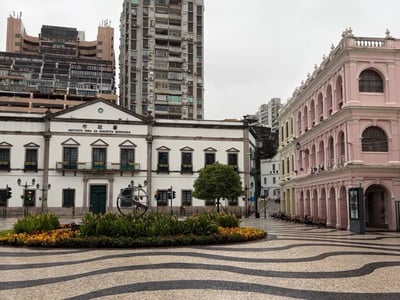
Plan the old town carefully with a stroller: Senado Square is cobbled and the Ruins of St. Paul's is a long staircase, so a baby carrier beats wheels for that half of the day. Cotai's flat, air-conditioned malls are the opposite — stroller heaven.

One quirk of the age rule above: because kids can't cross gaming floors, walking through a mega-resort takes longer than the map suggests — allow extra time. The family transport hack is the resorts' free shuttle buses from the ferry terminals and bridge port; anyone can ride them, kids included.

A simple one-day route

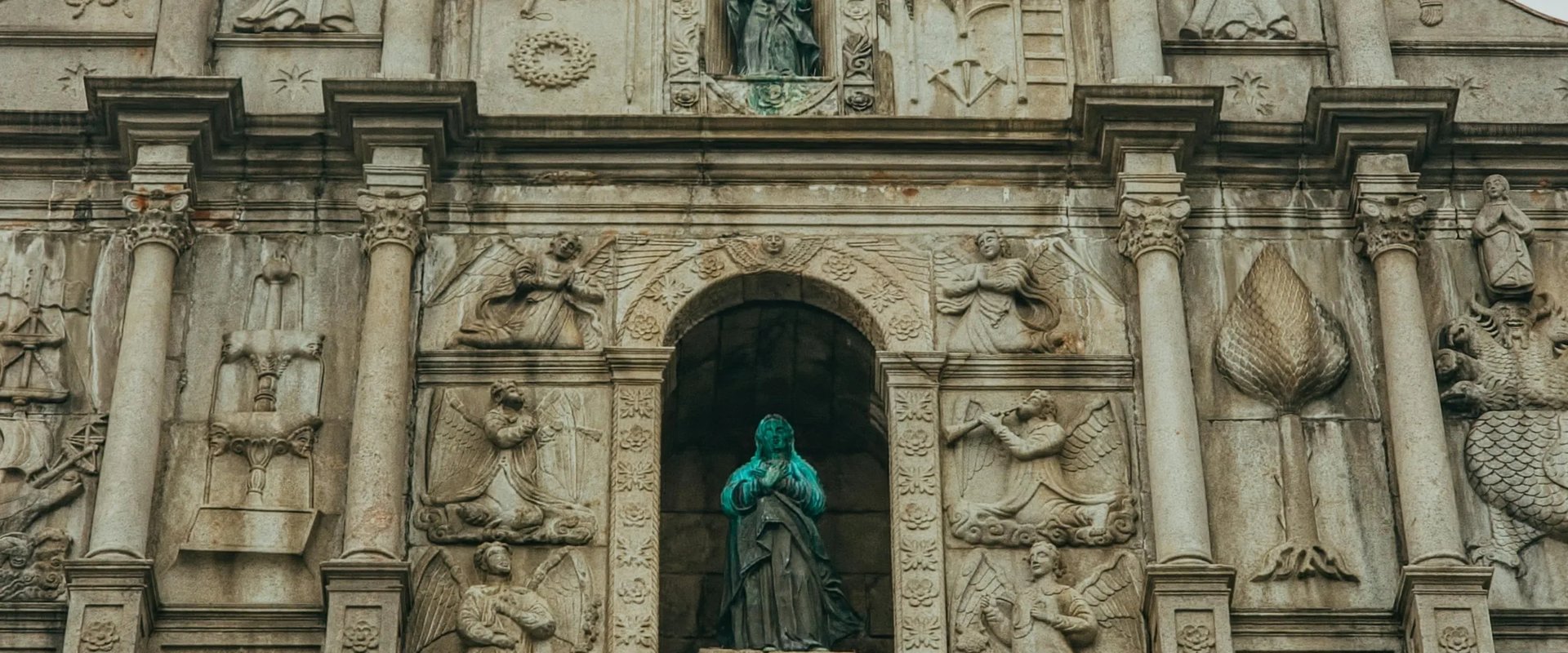
Cross early and work north to south. Take a morning ferry, then start in the old town: Senado Square, the Ruins of St. Paul's, and Monte Fort next door, with an egg tart stop — all walkable in 2-3 hours.

After lunch, take a bus or taxi to Taipa Village for the food lanes and almond-cookie shops. The Cotai strip sits right behind it, so walk into the Venetian or another mega-resort from there — the free interiors are the show.

End with Macau Tower around sunset or the Cotai strip lit up after dark, then catch the bus or ferry back. Staying one night runs the same route with breathing room, plus Cotai at night without a boat to catch.

Where Macau fits in your trip

Macau works best as the second half of a Hong Kong trip: 3-4 days in Hong Kong plus 1-2 in Macau is the classic combination. The two share a season, one arrival flight, and — in practice — a currency.

Give Macau one full day as a minimum, one night if you want the Cotai strip after dark. For what to actually do there — the Ruins of St. Paul's, Macau Tower, the Venetian, Taipa's food lanes — head to our Macau city page, and see the Hong Kong country guide for the other half of the trip.

Good to know

At a Glance

Best Time

October to December — dry, clear, 18-26°C

Currency

Macanese Pataca (MOP); roughly $1 = MOP 8. Hong Kong dollars are accepted 1:1 almost everywhere

Visa

Visa-free for most nationalities — 30 days to 6 months depending on passport; visa on arrival for most others

Timezone

GMT+8

Flight Time

Most visitors come via Hong Kong — 1 hour by ferry or about 40 minutes by bridge bus; Macau's own airport connects across Asia

Good to know

Frequently Asked Questions

Online now

We're here for you, 24/7

Real humans on WhatsApp and phone — before, during and after your trip. We typically reply in minutes.