Universal Studios Japan — home of Super Nintendo World and the Wizarding World of Harry Potter. One-day tickets about ¥8,600-10,900 ($53-$67). Arrive at opening; Nintendo World often needs a timed-entry slot booked in the app.
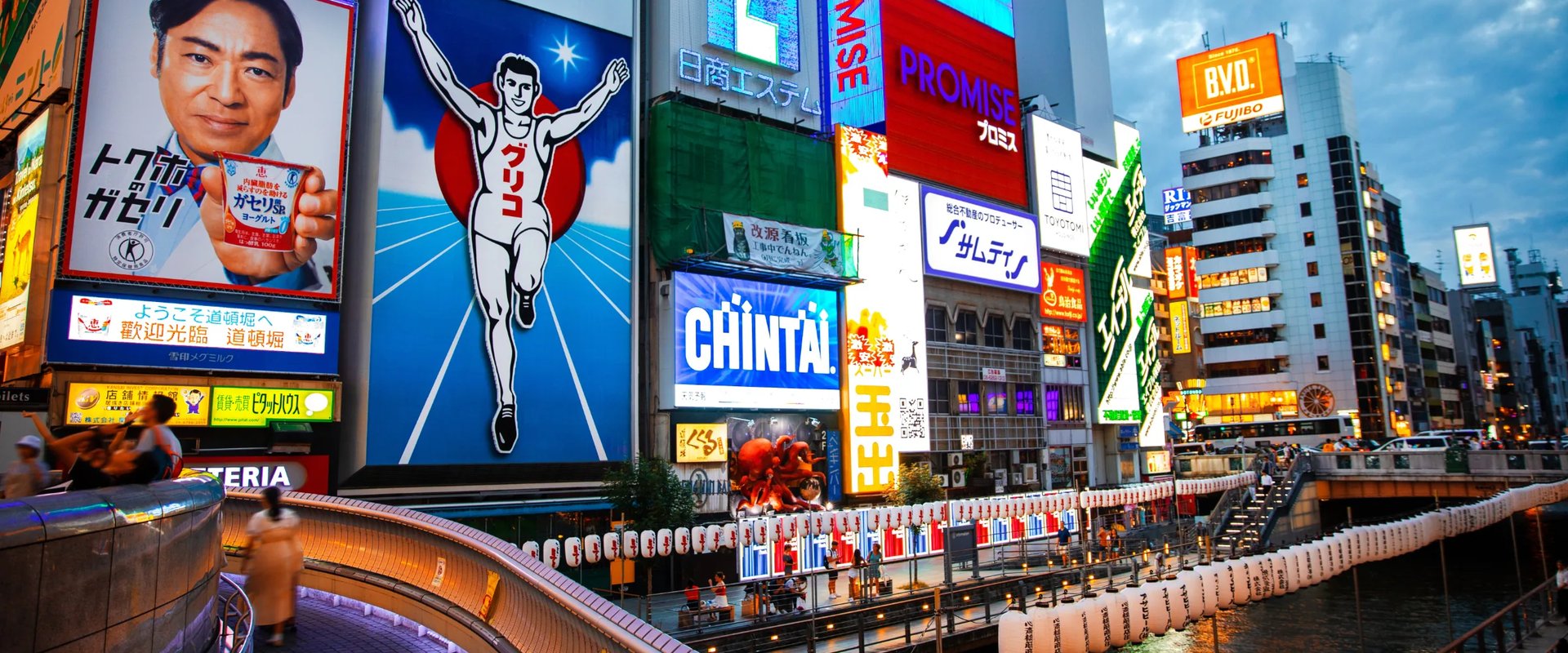
Dotonbori and the Glico Man — the canal strip of giant moving crab signs and food stalls. Free to wander, and the best single evening in the city. Budget ¥1,700-2,500 ($10-$15) for a stall-hopping dinner.
Osaka Castle — the white-and-gold keep above a moated park. Museum entry about ¥600 ($4); the park and views are free. The climb is worth it for first-timers, though the interior is a modern museum, not period rooms.
Osaka Aquarium Kaiyukan — one of the world's largest aquariums, built around two whale sharks in a 9-metre-deep tank. About ¥2,700 ($17). The best indoor half-day in Osaka with kids.
Umeda Sky Building — a rooftop ring 173 metres up, connecting two towers, with an open-air 360° walk. About ¥2,000 ($12). Pick sunset; it beats being sealed behind glass.
Shinsekai and Tsutenkaku Tower — the retro 1950s district for kushikatsu (fried skewers) at half of Dotonbori's prices. Skip the tower's paid deck if you have already done Umeda — the streets are the attraction.
Kuromon Market — Osaka's 190-year-old covered food market, ten minutes' walk from Dotonbori. A grazing breakfast or lunch runs about ¥1,200-1,800 ($7-$11); grilled scallops and wagyu skewers are the stars, and fruit stalls cover vegetarians. Go before noon — many stalls shut by mid-afternoon.
Namba Yasaka Shrine and Shitenno-ji — Namba Yasaka's giant lion-head stage is a free five-minute detour from Dotonbori and a favourite photo stop. Shitenno-ji, founded in 593, is Japan's oldest state temple; the inner precinct costs about ¥300 ($2). Both are quick, quiet breaks from the neon.