Skip to content
ReadyTrip
Melbourne

city

Melbourne

Laneway coffee, street art and Australia's best day trips

Overview

Melbourne in brief

Melbourne wins you over sideways. It has no Opera House moment — instead there are graffiti-covered laneways, the best coffee in the southern hemisphere, and a food scene that makes it the easiest Australian city to eat well in on any diet.

Its real trump card is what lies around it: the Great Ocean Road, the Phillip Island penguins and the Yarra Valley are all day trips. Plan 4–5 days so the city and at least one big day out both fit.

Good to know

At a Glance

Best Time

March–May and September–November; weather changes fast year-round

Getting There

Direct flights from most major Asian, US and Middle East hubs; 1.5 hours from Sydney

Local Transport

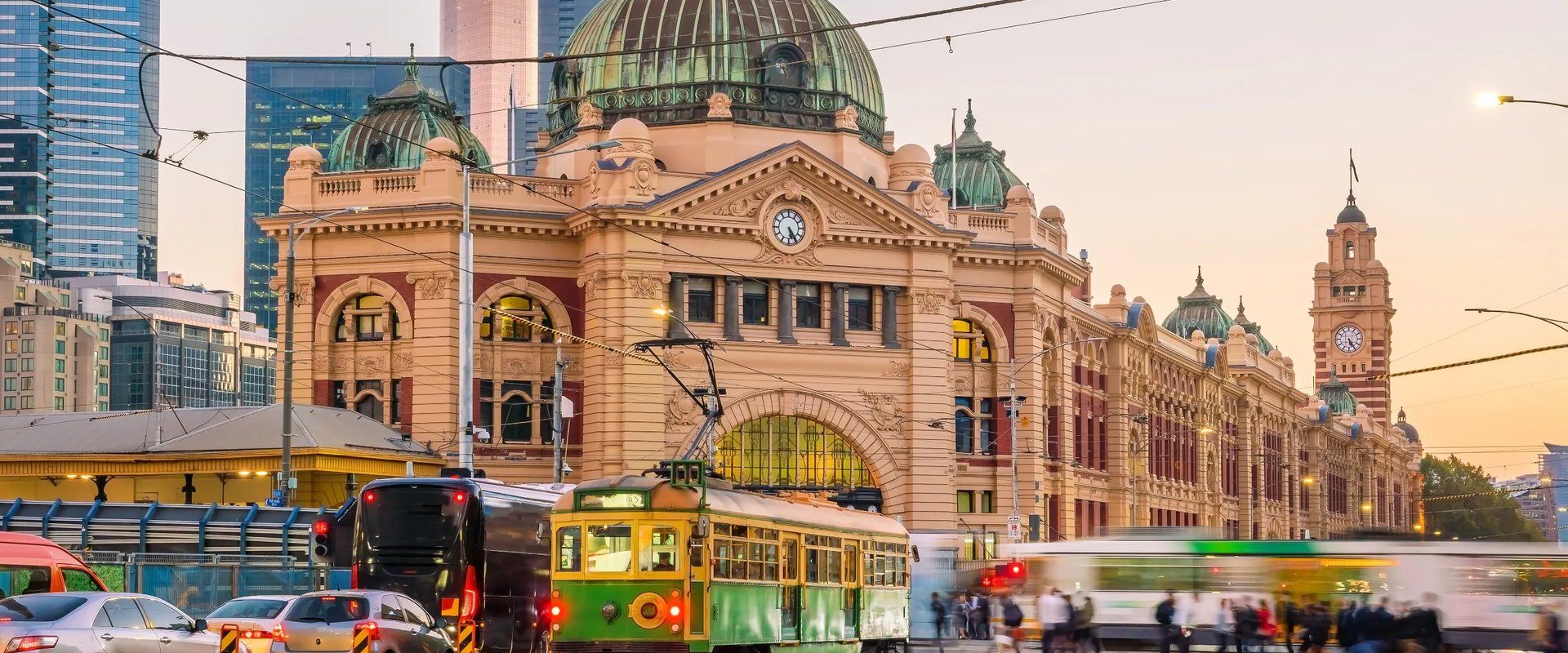
Trams everywhere — free within the city centre's Free Tram Zone

Ideal Days

4–5 days including 1–2 day trips

Top Melbourne attractions

Penguins, koalas and wildlife experiences

Top things to do in Melbourne

The laneways — Hosier Lane's ever-changing street art, Degraves Street's cafes, and arcades from the 1800s. Free, and best explored on foot with no plan. This is the Melbourne experience, more than any ticketed sight.

Great Ocean Road day trip — the coastal drive to the Twelve Apostles sea stacks is one of the world's great road trips. Full-day tours run about A$115-170 ($80-$120). It is a 12+ hour day; the payoff at the Apostles is worth it.

Phillip Island penguin parade — every sunset, hundreds of little penguins waddle up the beach to their burrows. Entry about A$30 ($21), or A$120-160 ($85-$110) with round-trip tours from the city. Especially memorable with kids; dress warm even in summer.

Melbourne Skydeck — the southern hemisphere's highest viewing deck, 285 metres up the Eureka Tower. About A$31 ($22); the 'Edge' glass cube that slides out of the building costs extra. Go on a clear day — check the sky first, not the calendar.

Queen Victoria Market — a working, 145-year-old market for cheap eats, fruit and souvenirs. Free entry; closed some weekdays, so check days before you plan around it. The night market (summer and winter seasons) adds food trucks and live music.

Melbourne Zoo or SEA LIFE Aquarium — the zoo (about A$42 / $29) has koalas and kangaroos 4 km from the centre; the aquarium is the rainy-day pick with king penguins. Choose one, not both, on a short trip.

NGV International — Australia's most-visited art gallery, on St Kilda Road. General entry is free; only the big touring exhibitions are ticketed. The stained-glass ceiling in the Great Hall is worth the walk alone, and it's the top rainy-day pick.

St Kilda — the bayside suburb, about 25 minutes by tram: a pier, cake shops on Acland Street, and a small colony of little penguins at the breakwater at sunset, free to watch. It's a fraction of Phillip Island's parade, but it costs nothing.

Puffing Billy — a century-old steam train through the Dandenong Ranges forest, about an hour east of the city. Returns from Belgrave cost around A$60 (~$42). It's the day trip for families with young kids — shorter and cheaper than the Great Ocean Road.

Skip a paid city bus tour — the free City Circle tram (Route 35) loops the same landmarks with commentary.

Where to stay in Melbourne

Stay in the CBD if it's your first visit. You're inside the Free Tram Zone, the laneways are at your door, and every day-trip tour picks up nearby. Southbank is the tidier alternative across the river — river views, the arts precinct and the Skydeck, mostly bigger hotels.

Fitzroy and Collingwood suit a second visit: the best cafes and street art, boutique stays, 10-15 minutes out by tram. St Kilda works for beach-first trips and budget beds, accepting a 25-minute tram into town. Anywhere on a tram line works; Melbourne is a transit city.

Melbourne with kids

Melbourne with kids is cheap to do well, because the best family stops cost little or nothing. Scienceworks, in Spotswood, is the one most visitors miss: a hands-on science museum where under-16s enter free and adults pay about A$15 (~$10) — the strongest wet-morning option in the city. The free St Kilda penguins, the zoo-or-aquarium choice and Puffing Billy are all covered in Top things to do; with young kids, pick one animal stop plus the steam train rather than forcing all three in.

Stay in the CBD or Southbank (see Where to stay) so the trams do the legwork with a pram. Two Australian rules apply even in mild weather: the sun is stronger than it feels — hats and sunscreen daily — and at any beach, swim only between the red-and-yellow flags. Pace one anchor activity per day and leave afternoons loose.

Best time to visit

March–May and September–November are the most reliable windows: mild days between 15–25°C and lighter tourist traffic. Melbourne weather flips fast in any month, so layers and a rain jacket are non-negotiable.

December–February is summer — great for beaches and the night market, but the busiest and priciest, and the Australian Open (January) fills hotels. June–August is cool (6–14°C) and fine for a city-focused trip, usually with the cheapest flights and rooms.

Getting around

Trams are the city's veins, and rides within the CBD's Free Tram Zone cost nothing — most central sights fall inside it. Beyond the zone you need a myki card or contactless tap-on, with fares capped per day at around A$11 ($7.50).

From the airport, the SkyBus reaches the city in about 30 minutes for around A$23 ($16) — there is no airport train. For the Great Ocean Road and Phillip Island, take a tour or rent a car; public transport does not usefully reach either.

What things cost in Melbourne

Melbourne's best sights are free — the laneways, NGV, the City Circle tram, St Kilda's penguins — so the money goes on food and day trips. Coffee runs A$5-6 (~$3.50-4), a casual meal A$20-30 (~$14-21), and a good dinner with a drink A$50-80 (~$35-55) per person.

Fixed costs are modest: the SkyBus from the airport about A$23 (~$16), the daily transport cap around A$11 (~$7.50), the Skydeck about A$31 (~$22), the zoo about A$42 (~$29).

The day trips are the big line items — A$115-170 (~$80-120) for the Great Ocean Road, A$120-160 (~$85-110) for Phillip Island with transport. Plan around A$150 (~$105) per person per day plus your hotel, and more on day-trip days.

Where it fits in your trip

Melbourne is one half of the classic Australia pairing with Sydney — a 1.5-hour flight apart. The usual 8–10 day plan: fly into one city, out of the other, 4–5 days each. Sydney brings the harbour icons; Melbourne brings the culture and the day trips.

If you must pick one city on a shorter trip, choose by taste: Sydney for landmarks and beaches, Melbourne for food, coffee and nature day trips. Families heading north can add the Gold Coast theme parks. Visa steps and money advice are on our Australia page.

Good to know

Frequently Asked Questions

Online now

We're here for you, 24/7

Real humans on WhatsApp and phone — before, during and after your trip. We typically reply in minutes.